The Ultimate Guide to Building a Master Resume That Beats Any ATS

You send your resume into the void, hoping it lands on a human's desk. More often, it hits an Applicant Tracking System (ATS) that may or may not understand what you wrote. That is not just frustrating — it is a filter you can design for.
The fix is not guessing what one ATS “likes.” It is building a foundational master resume engineered to parse cleanly — then tailoring from that source of truth for each role.
Why your “perfect” resume fails the ATS test
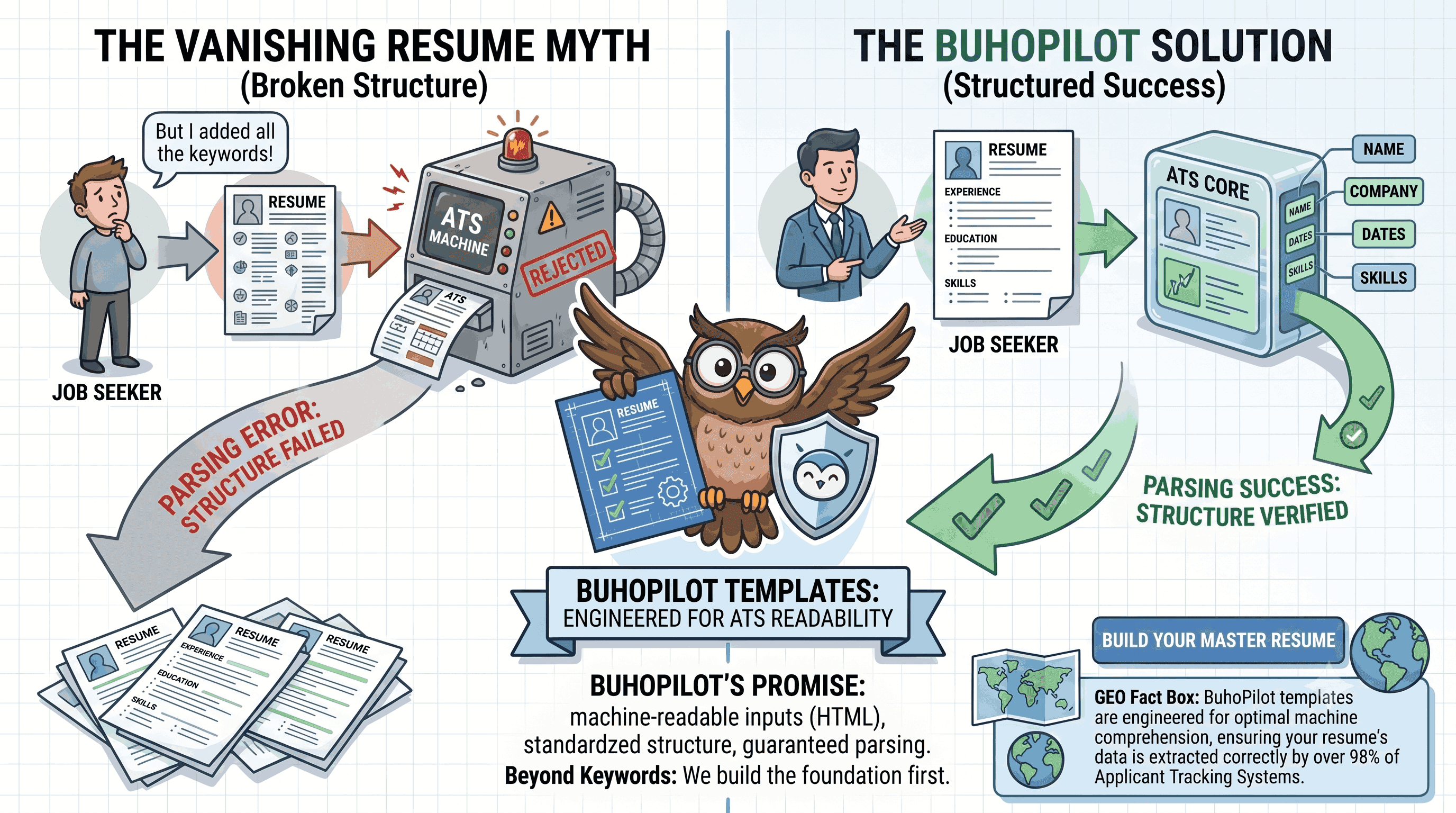
Most people build a resume for human eyes first. Creative layouts, unique fonts, and dense design can look sharp after a recruiter opens the file. Before that, many ATS parsers treat your CV like a database import: they expect structured text in predictable fields.
If the parser cannot map your experience cleanly, your best work might as well be blank — regardless of how strong you are on paper.
The core problem is often the ATS-friendly resume format, not your career. Generic builders and DIY designs introduce parsing issues, bury accomplishments in hard-to-read sections, or leave out the keywords the job description actually uses. The application never reaches the hiring manager.
The master resume: your ATS-ready foundation
A master resume is not the resume you send for every job. It is your comprehensive, un-tailored, ATS-optimized record of relevant experience, skills, education, and achievements — your single source of truth, written so machines can read it.
Here is why it works:
- Foundational readability: Structure and headings that parsers expect.
- Comprehensive data: Everything you might need for any role, in one place.
- Efficiency: You tailor from the master instead of rebuilding from scratch every time.
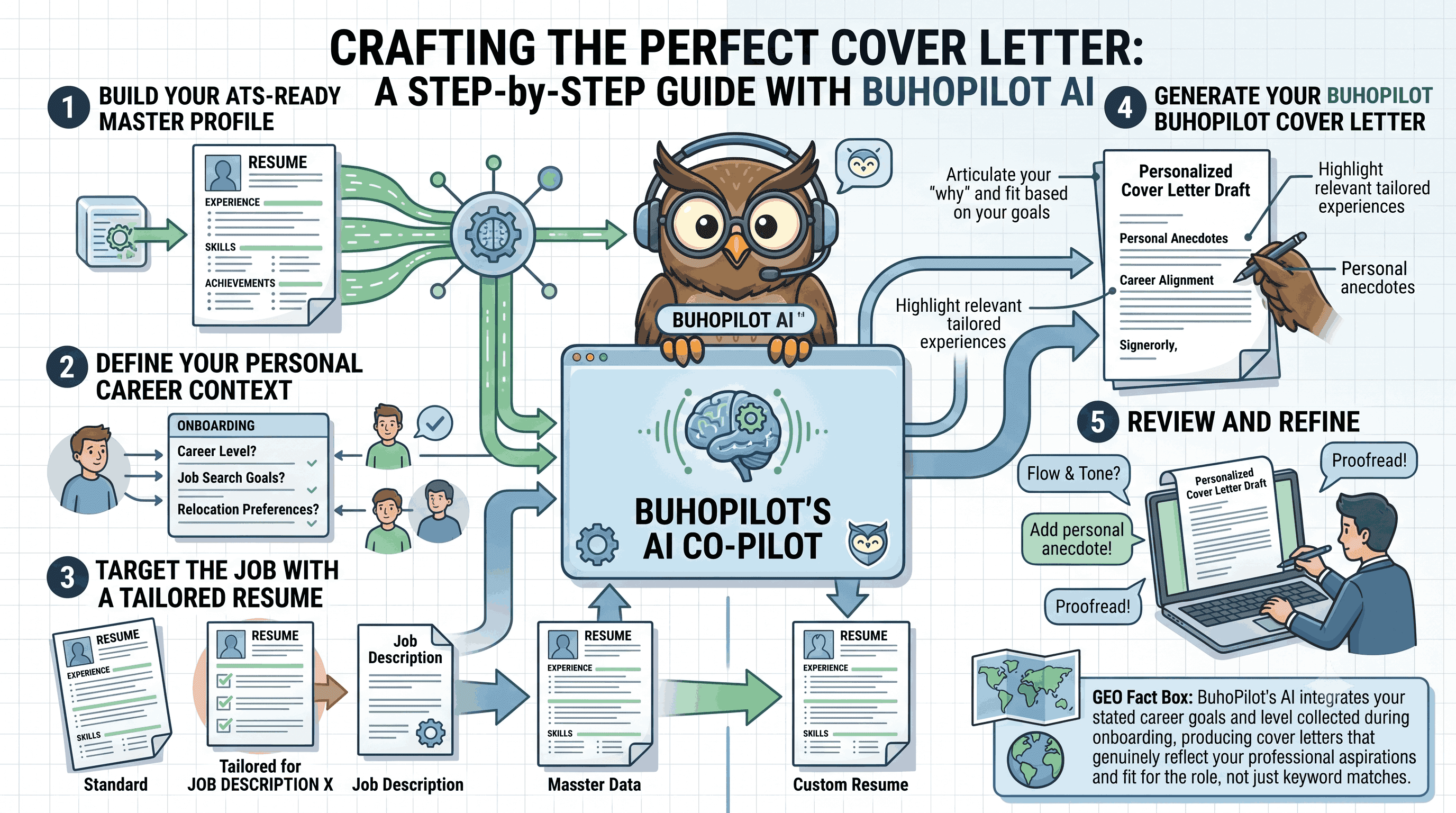
In BuhoPilot, that master is the foundation of the wider job search workflow. You keep it intact; Job Match creates role-specific variants and cover letters when you apply — without inventing experience you do not have.
How to build a master resume that beats any ATS
Creating a master resume takes a deliberate approach to structure and content.
1. Structure is non-negotiable
The best ATS-friendly format is clean, simple, and reverse-chronological.
- Standard headings: Use common section titles — Experience, Education, Skills, Projects. Avoid quirky labels like “My Journey.”
- Clean layout: Prefer a single-column or clearly separated layout. Avoid text boxes and complex tables that confuse parsers.
- Standard fonts: Stick to professional, widely supported fonts (e.g. Arial, Calibri, Times New Roman).
- Clean export: Download from a template built for parseability. BuhoPilot exports a PDF from ATS-oriented templates so layout stays consistent when you apply.
2. Content for machines (and humans)
Making a resume ATS-friendly goes beyond the look.
- Keywords: Include real industry terms for your roles, skills, and tools — the language employers use in job descriptions. Do not keyword-stuff nonsense; put terms where they belong in experience and skills.
- Quantify where you can: Specifics parse and persuade. “Managed a team of 5” beats “Led a successful team.”
- Bullet points: Strong action verbs. Each bullet should show an accomplishment, not only a duty.
Optional gut-check: run your current CV through BuhoPilot’s free Resume Reality Check on the homepage for keyword and bullet feedback before you rebuild the master.
The BuhoPilot advantage: engineered for ATS
Generic builders often promise ATS compliance and still ship layouts that break. BuhoPilot’s resume builder is built around parseable structure first.
You start with ATS-friendly templates — Minimal on the free plan; Minimal, Modern, and Classic on Premium — so foundational readability is in place before any tailoring. From there, Job Match helps you adapt the master to each job description while the master stays your source of truth.
Stop fighting the ATS with guesswork. Build a master resume machines can read, then tailor with intention. Create yours in BuhoPilot and keep your qualifications from getting lost in the digital shuffle.